

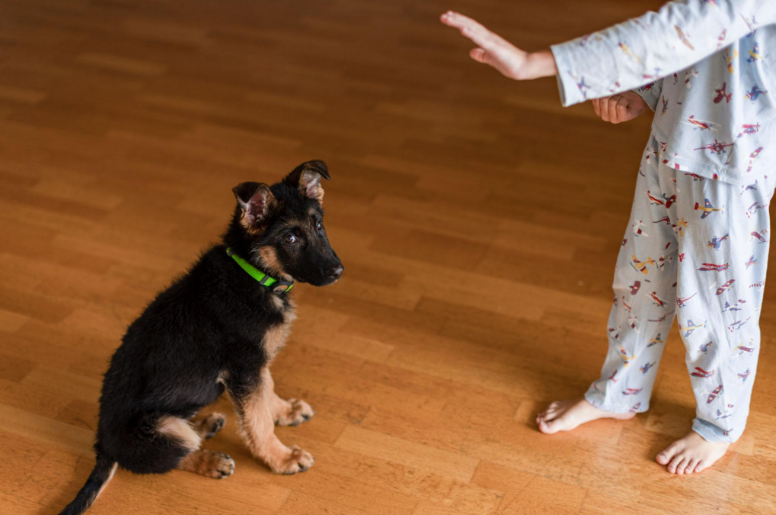
Teaching a puppy to release an object on cue is one of the most useful skills a dog can learn. The “drop it” command goes far beyond a game of fetch. It can prevent a puppy from swallowing unsafe objects, reduce resource guarding behaviors, and create calmer interactions during play. Guidance from organizations such as American Kennel Club and ASPCA consistently emphasizes that reward based training creates stronger and more reliable results than punishment based methods.
Many puppy owners encounter a common pattern. The puppy grabs a sock, a slipper, or a favorite toy, and suddenly turns it into a chase game. Running after the puppy usually creates the opposite effect. The object becomes more valuable because the puppy sees the interaction as exciting and rewarding.
The two toy training system changes the entire experience. Instead of forcing the puppy to give something up, the puppy learns that releasing one item leads to another reward. The result is a positive cycle where “drop it” becomes associated with fun rather than loss.
Why the Drop It Command Matters for Puppy Safety and Development
The ability to release objects is not simply a convenience. Veterinary experts at American Veterinary Medical Association note that young dogs often explore the world with their mouths, making accidental ingestion of harmful objects a real concern.
Puppies commonly pick up:
• Small household items
• Shoes and clothing
• Plastic pieces
• Children’s toys
• Sticks or outdoor debris
• Food items that may be unsafe
Teaching a reliable release cue can help prevent situations from escalating. Instead of wrestling an object away, owners can calmly use a familiar command.
Beyond safety, this skill also supports healthy communication. According to resources from Humane World for Animals, positive exchanges help puppies build trust and reduce conflict during training.
Understanding How Puppies Learn During Play
Puppies do not naturally understand human language. They learn through repetition, timing, and consequences.
When a puppy hears “drop it,” several things happen mentally:
→ The puppy hears a sound pattern
→ The puppy connects that sound with an action
→ The puppy experiences a reward
→ The puppy repeats behavior that creates good outcomes
The challenge with traditional methods is that puppies often experience only loss. If every released object disappears forever, the puppy may become reluctant to let go.
The two toy system works because it changes the reward structure. Studies discussed through American College of Veterinary Behaviorists support the idea that positive reinforcement strengthens desired behavior more effectively than confrontation or force.
What Is the Two Toy Training System?
The two toy method is simple:
The puppy plays with Toy A.
The trainer introduces Toy B.
The puppy becomes interested in Toy B and releases Toy A.
The trainer immediately says “drop it” and rewards the puppy by beginning play with Toy B.
Over time the puppy learns that releasing one item leads to another enjoyable experience.
Instead of hearing:
“Give that back.”
The puppy begins understanding:
“Releasing things creates something better.”
Choosing the Right Toys for Training Success
Not every toy works equally well.
A useful training toy should be:
• Safe and age appropriate
• Easy to hold
• Interesting without being overwhelming
• Similar in value to the second toy
Recommendations from PetMD and VCA Animal Hospitals often suggest rotating toys to maintain interest while avoiding overstimulation.
Good options include:
→ Soft tug toys
→ Small rope toys
→ Plush toys with moderate excitement value
→ Lightweight balls
Avoid:
• Toys with loose pieces
• Extremely high value chews
• Toys small enough to swallow
• Objects associated with resource guarding
Comparison Table: Selecting the Best Two Toy Combination
| Toy Type | Advantages | Drawbacks | Best Use |
|---|---|---|---|
| Rope toy | Easy to grip and exchange | May fray over time | Tug training |
| Soft plush toy | Comfortable for puppies | Can tear easily | Indoor sessions |
| Rubber ball | High excitement level | Can create over arousal | Fetch training |
| Fleece tug toy | Encourages interaction | Less durable | Reward exchanges |
| Small squeaky toy | Captures attention quickly | May overstimulate some puppies | Short sessions |
Step by Step Guide to Teaching Drop It with Two Toys
Step One: Start in a Quiet Environment
Training success begins with low distraction settings.
Choose:
• Living rooms
• Quiet yards
• Calm indoor spaces
Avoid dog parks, crowded environments, or highly stimulating areas.
Experts from Fear Free Pets frequently recommend minimizing distractions while introducing new behaviors.
Step Two: Introduce Toy One
Begin play naturally.
Throw Toy A a short distance or engage in gentle tug play.
Allow the puppy to enjoy the toy without pressure.
The goal is engagement rather than immediate obedience.
Step Three: Reveal Toy Two
Once the puppy becomes interested in Toy A, make Toy B suddenly exciting.
Move it slightly.
Bounce it gently.
Create curiosity.
Many puppies instinctively release the first object to investigate the second.
Step Four: Add the Cue
The moment the puppy releases Toy A:
Say:
“Drop it.”
Immediately reward with Toy B.
Timing matters enormously.
The cue should occur as the action happens, not several seconds later.
Step Five: Repeat Short Sessions
Puppies learn better through repetition and brief practice periods.
Training sessions should usually last:
• Three to five minutes
• Two to four times daily
Short sessions help maintain enthusiasm.
Common Mistakes That Slow Progress
Many training problems happen because owners accidentally reinforce unwanted behavior.
Chasing the Puppy
Running after a puppy often creates a game.
The puppy thinks:
“Great. The fun just became more exciting.”
Instead:
Remain calm.
Use toy exchanges.
Pulling Objects Away
Physically removing objects can create resistance.
Repeated struggles may increase possessiveness.
Repeating Commands Excessively
Saying:
“Drop it. Drop it. Drop it. Drop it.”
teaches the puppy that multiple repetitions are normal.
Use the cue once.
Wait briefly.
Reward success.
Training Too Long
Young puppies lose focus quickly.
Mental fatigue often appears as:
• Ignoring cues
• Excessive biting
• Wandering away
• Sudden hyperactivity
Signs the Puppy Is Understanding the Command
Progress rarely appears overnight.
Observable improvements often include:
→ Releasing toys more quickly
→ Looking toward the owner after hearing the cue
→ Reduced grabbing behavior
→ Increased engagement during play
→ Faster response across environments
Small improvements matter.
Learning typically develops gradually rather than in one dramatic moment.
Moving Beyond Toys Into Real Life Situations
Once the puppy reliably releases toys, begin practicing with everyday items.
Start with safe objects such as:
• Washcloths
• Empty cardboard tubes
• Safe chew items
Eventually progress to:
• Outdoor distractions
• Walk situations
• Household environments
The key is increasing difficulty slowly.
Organizations such as The Humane Society of the United States frequently recommend gradual exposure instead of sudden jumps in difficulty.
When Treats Can Help the Two Toy Method
Although the focus here is toys, food rewards can strengthen learning.
Some puppies value food more than toys.
Useful options include:
• Small training treats
• Tiny chicken pieces
• Soft puppy treats
• Small kibble rewards
The reward should remain immediate and small.
Large treats can interrupt training flow.
FAQ About Teaching Puppies the Drop It Command
How long does it take for a puppy to learn drop it?
Many puppies begin understanding the basic concept within several days of consistent practice. Reliable performance around distractions often takes several weeks.
What age can puppies start learning drop it?
Basic training can begin around eight weeks of age using gentle sessions and age appropriate expectations.
Can the two toy system work for older dogs?
Yes. Adult dogs often respond well because the method relies on positive reinforcement rather than age specific learning.
What if the puppy ignores the second toy?
The toys may not have equal value. Experiment with different textures, sounds, or movement patterns.
Should the command be used for dangerous objects?
If a puppy grabs something harmful, avoid creating panic. Use the trained cue if possible and calmly exchange for a higher value reward.
Can tug games encourage aggression?
Research and behavior experts indicate that structured tug games with rules generally do not create aggression when played appropriately.
Final Thoughts on Building a Reliable Drop It Command
Teaching a puppy to release objects is less about control and more about communication. The two toy system works because it turns cooperation into a rewarding experience rather than a conflict. Puppies learn faster when they feel engaged, curious, and motivated.
The process begins with simple exchanges but eventually becomes something larger. A puppy that willingly releases a toy today may also willingly release unsafe objects tomorrow, cooperate during play, and respond calmly in everyday situations.
Consistency matters more than intensity. Short sessions repeated regularly often produce better outcomes than long training attempts. Progress may appear in small steps at first, but repeated positive experiences gradually create strong habits.
Over time, the puppy begins to understand an important lesson: letting go does not mean losing something valuable. Instead, it becomes the beginning of another rewarding interaction. That shift in understanding is what transforms a basic command into a practical life skill.